


By Dearbail Jordan, Business reporter
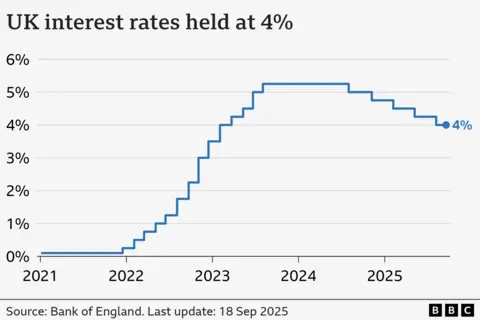
UK interest rates have been held at 4% as the Bank of England governor warned “we’re not out of the woods yet” in terms of rising inflation.
Analysts had not expected interest rates, which influence borrowing costs and returns on savings, to be cut given that prices are rising at nearly twice the Bank’s target rate.
The Bank said it expected inflation to return to its key target of 2%, but remains cautious on when it will trim borrowing costs again.
Alongside the interest rate decision, the Bank also announced it would reduce the amount of government debt it holds at a slower pace, coming just weeks after turmoil in the financial markets.
The Bank has cut interest rates five times since August last year as the pace of inflation eased.
However, since April inflation has been heading higher again – fuelled in part by rising food costs.
While it kept rates on hold this time, the Bank said that two of the nine members of its rate-setting Monetary Policy Committee (MPC) had voted to cut rates to 3.75%.
The MPC will meet two more times this year to discuss rates, and the Bank said any further cuts would depend on whether it sees evidence that price pressures were easing.
“We’re not out of the woods yet so any future cuts will need to be made gradually and carefully,” said the Bank’s governor, Andrew Bailey.
He said: “I continue to think there will be some further reductions but the timing and scale of those is more uncertain now.”
The Bank also announced it would reduce the rate at which it sells its stock of UK bonds.
This is mainly government debt the Bank amassed during difficult periods, such as the global financial crisis of 2008-09 and the Covid pandemic, as a way of stimulating the economy.
As Chancellor Rachel Reeves prepares to announce the Budget on 26 November, a higher cost of servicing Britain’s vast pile of debt risks reducing the amount of headroom she has against her self-imposed tax and spending rules.
At its peak, the Bank of England had accumulated £875bn worth of bonds.
It has been reducing the amount of debt it owns by about £100bn a year through a process known as “quantitative tightening”.But on Thursday it said that from October onwards, it would reduce that to £70bn a year.
Mr Bailey said the change would allow the Bank to carry on with its plans “while continuing to minimise the impact on gilt market conditions”.
Looking ahead to November, the Bank said business sentiment was “downbeat” with many firms pointing to “the government’s upcoming autumn Budget as a source of uncertainty”.

Credit: BBC




More Stories
Meta starts kicking Australian children off Instagram and Facebook
Ghana: Afram Plains residents demand urgent fix for broken Agordeke Ferry
ECOWAS Brown Card Secretary-General Winfred Kwasi Dodzih honoured among top industry leaders by UPSA