


By UTCHE OKWUOSAH
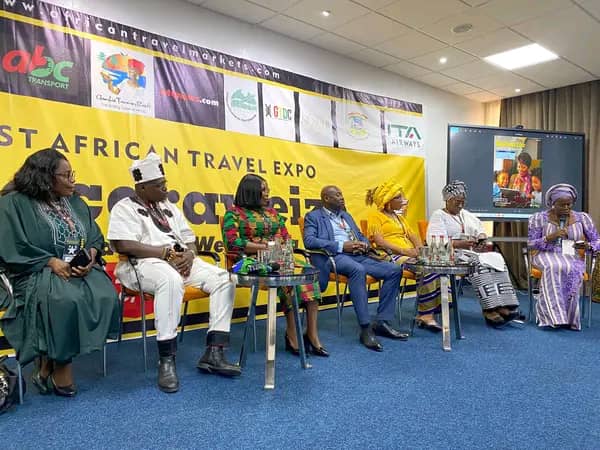
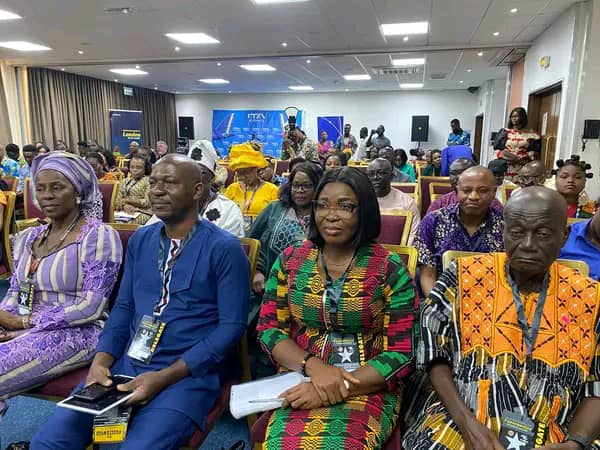
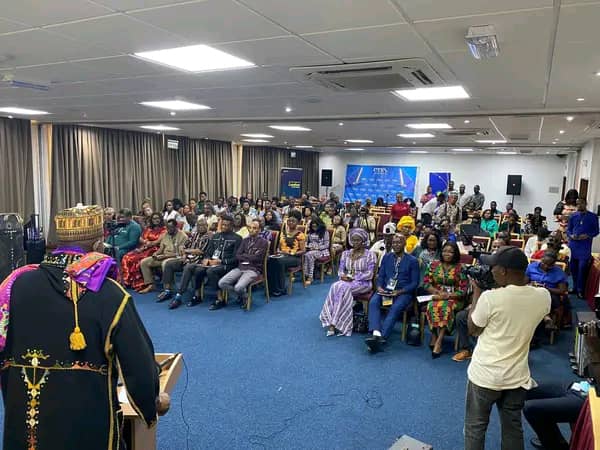
The 8th “Accra Weizo Conference (27th June, 2025) rose from their mind rubbing session on the “Challenges and Opportunities” of seamless travel across the West African States with the conclusion that there is still a whole lot to be done to achieve the ideal freedom of movement envisaged and being implemented by West African States under the regional body, the Economic Community of West African States (ECOWAS).
In a realistic and experience informed conversation that examined the free movement protocol of the ECOWAS and its contribution to the growth of tourism and integration, some of the key tour operators in West Africa – Ghana, Nigeria, Senegal, Benin, Togo, and Gambia – upheld that free movement across borders in West Africa is still largely riddled with harrowing hassles experienced by citizens while travelling across borders, from one country to the other.
The conference, held at the Accra City Hotel, in Accra, with the theme – Seamless Travel In West Africa: Opportunities and Challenges – also decried the high cost of air travel, flight connectivity, the state of inter-state roads, and the non-existence of railroad transportation that ought to make movement of goods and persons swift, less cumbersome, and affordable. The panel of discussants unanimously agreed that, if the necessary infrastructure for a range of land transportation options across ECOWAS were available, it would surely bring down the pressure on air transportation, and consequently reduce the prevailing high cost of airfares.
During the panel discussion on the challenges and opportunities in seamless travelling within the ECOWAS sub-region, Ms. Yvonne Donkor, President, Tour Operators Union of Ghana (TOUGHA), opined that “we still live as strangers” in ECOWAS, encapsulating the current scenario playing out in the region owing to the inadequacies in both policy and infrastructure.
“… Though we are doing our best to collaborate and partner, we still live as strangers. That is why we have this limitation in seamless travel within the West African sub-region,” Ms Donkor pointed out.
She then went on to enumerate some of the sticking challenges as the visa challenges, the border bottlenecks, and the poor land transportation infrastructure, as well as the absence of flight connectivity.
Ms. Donkor acknowledged that some strides have already been made by the region in the area of visa policies, considering how the situation was before now; however, she also admitted that much could, and should, be done, considering how dynamic tourism has become globally. She situated the main challenges in visa administration to the inconsistency in policy, and concluded that the current border bottlenecks – travellers’ harassment and extortion, avoidable delays in visa processing, etc. – could be traced to inefficiency and policy inconsistency mentioned earlier. All of these particularly affect “over-ground” tourism negatively, she submitted.
In the area of air transportation particular, she said: “When it comes to flight, only a few countries have connectivity; most others have to be interconnected, or through hubs…” consequently making fares very expensive. The TOUGHA President concluded that those are “some of the (challenges) limiting seamless travel within the West African…region”, and all are largely owed to the weak implementation, and sometimes, the non-implementation, of the free movement protocol of the ECOWAS by member States; as well as the lack of public education and sensitization by ECOWAS as a body. She advocated for more public enlightenment by ECOWAS, and for closer monitoring, supervision, and guidance in the implementation of the well-meaning policies that the member States have all agreed to.
The issue of the lack of efficient implementation, or the absence the implementation of the ECOWAS free movement protocol was actually identified as the major culprit denying ECOWAS citizens the opportunity to enjoy the much desired seamless travel and integration across the borders of the West African States.
Fortunately, however, the ECOWAS Director of the Private Sector was present at the conference and was able to give firsthand clarification and update on the activities of the regional body to ensure the realization and sustainability of the seamless travel objective of the organization.
Speaking with TBT in an exclusive interview, Mr. Anthony Luka Elumelu admitted that the complaints he heard at the conference were not new to the regional body but that the concerns of the people – tourists, business travellers, and ordinary citizens – are being continually addressed.
He said that ECOWAS has done so much to ensure that the best integration policy is adopted in order to create a seamless travel experience across West Africa. “We have (even) demystified the passport… We are not saying that there are no challenges, but challenges are man-made; we can overcome them when we do the right thing…by enforcement,” he said.
On the issue of public enlightenment and sensitization, Mr. Elumelu argued that, contrary to the general impression that ECOWAS was lax in monitoring or sensitizing the public, quite a lot is being done in terms of capacity building and sensitization.
“We are building the capacity of tour operators; we are doing this in order to harmonize ECOWAS policies, in terms of tourism. We are also training them on the classification of hotels… what we call “Eco-Lodge”, and by next week, we are moving on to what is called “Standard”, to make sure that people comply with standard. Even in terms of movement of goods… manufacturers cannot just produce and send the products across borders, they must comply with certain standards, to make them acceptable.
“So ECOWAS is doing quite a lot as a Commission in terms of sensitization and building of capacity… but implementation…remember that power rests with the member States. All we do is to make sure that we create the environment to compare notes, peer-review, and we can only flag it when we have lack of compliance.
“Yes, we get feedbacks; we do assessments, and we are happy that the feedbacks are not terrible.”
And concerning border hassles and what ECOWAS is doing to ameliorate the harsh experience, if not to entirely eliminate it, the ECOWAS representative said that the President of the Commission actually recently drove through the borders himself, beginning from Seme, for on-the-spot assessment. “And to see such a proactive interest demonstrated at that high level, shows that ECOWAS is doing its best to ensure seamless fluidity in terms of border crossing. At the end of the trip, he made his observations to the relevant authorities.
“I am certain that member Head of States will also react accordingly to the findings and observations of the Commission based on the report filed in by the President of the Commission.
“So you can see that ECOWAS is playing a critical and active role to see that member States comply with all the mutually agreed regulations that ensure the achievement of seamless border crossings.”
He went further to hint TBT on the possibilities of ECOWAS creating monitoring teams, at the highest level, for the monitoring of the borders, including having a mobile court where official offenders are tried on the spot, as work on the full automation of the borders continues unabated.
Seamless connectivity
Concerning the aspiration for having a seamless connectivity of flights in Africa, particularly in West Africa, listening to the contributions made at the 8th Accra Weizo Conference, the impression is that the achievement of seamless flight connectivity in Africa as a whole still remains a daunting challenge that influencers in the industry do not even appear to have any solution in sight.
In a sideline conversation with the organiser of the Accra Weizo, Ambassador Ikechi Uko, told TBT that the conversation on the resolution of the seeming intractable challenge, for now, appears to be one that will still continue.
“The individual airlines in the Single African Air Transport Markets (SAATM) do not want other African airlines to operate in their countries. As a result, their governments would sign up to such cooperation agreements, but the airlines themselves would not implement the agreements. So, without (any local) airline agreeing, no other airline can move in to another’s territory. It is the longest lasting process in Africa, yet, it has not worked till today.”
Asked what he, as a long time player in the aviation and tourism industry, thinks of the fate of this dream of seamless air connectivity. Is it an achievable objective?
“I think that the solution lies in the airlines working it out themselves. AFRAA (African Airlines Association) can make it work, better than government can. Having said that, I should also add that it is a mindset problem. So, it can only work when the airlines drop their fears of losing their territory, so to speak, to other fellow African airlines,” Ambassador Uko, who is also the organiser of Africa’s biggest travel market, the Akwaaba African Travel Market, concluded sadly, letting out the feeling that, in actuality, the solution may still be a long time coming.
As if in corroboration of Ambassador Uko’s response above, the Secretary General of African Airlines Association (AFRAA), Mr. Abderahmane Berthe, in an interview with Aviation & Allied Business Journal not too long ago, had given a similar answer to the question of what he thought was the way forward for SAATM?
“There is no supranational power to force them (airlines) to implement it… To be honest, in many cases, the reason it is not implemented is that, some States want to protect their national carriers.”
As important and as strategic as the issue is to growing both the aviation and tourism markets, the solution to the challenge still remains an elusive one.
AI as a tool and not a threat
Artificial Intelligence (AI) is fast becoming a ubiquitous work tool in the aviation and tourism industries globally. Not surprising then that it found its place in the conversation content of the conference. It was simply inevitable as AI is rapidly making it more convenient for both the industry operators and the consumers of their services to find it a dependable personal assistant.
For the gathered top notch West African tour operators, AI was accented to as an inevitable partner in delivering seamless services to their growing number of clients spread across the globe.
“AI has not come to replace tour operators but to complement us”, Mme. Ann Ayi, Treasurer, Tour Operators of Benin, responded promptly when asked by the moderator, Dr. Olamma Ojukwu, what her thoughts were on the advent of AI into the industry. As a result, Mme. Ayi explained, there is rather a compelling need for tour operators to upgrade and re-enforce their operation.
Impressively, Mme. Ayi’s opinion was shared by all, with Ms. Donkor, President of TOUGHA, adding that tour operators in Ghana are already conducting their business online. “AI has come to stay, and will even continue to develop,” she said resolutely, and went on to advise that industry players should “humble” themselves and begin to learn how to fully incorporate AI in their operation.
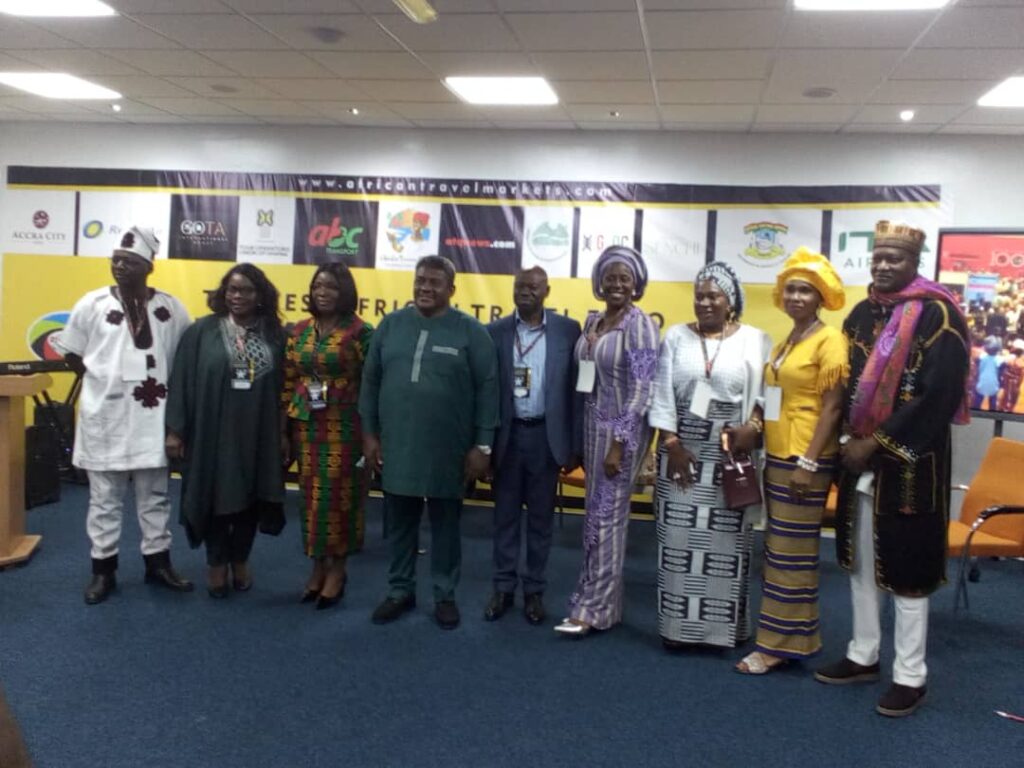
L-R: Mr. Abdou Romuald Diouf, Senegal; Mme. Ann Ayi, Benin Republic; Ms. Yvonne Donkor, Ghana; Mr. Anthony Elumelu, ECOWAS; Mr. Seedy Kanyi, Gambia; Dr. Olamma Ojukwu, Benin Republic; Mrs. Bolaji Mustapha, Nigeria; Dr. Patience Okorie-Mbonu, Togo; Ambassador Ikechi Uko, Organizer
Collaboration is the way forward
The panelists expressed absolute confidence in the future of tourism in Africa, particularly in West Africa. They also expressed appreciation for the Accra Weizo platform provided by African Travel Markets. Mr. Abdou Romuald Diouf, CEO, LRAD Tourisme, Senegal, even went as far as requesting for the Weizo event to be made rotational from country to country, with each edition adapting the name of the hosting city. This suggestion went to underscore how much they appreciated the contribution the event is making to the growth and sustainability of their industry.
Deliberating on the best way to maximize the harnessing of the abundant tourism opportunities in the West African region, collaboration came tops as one of the effective strategies capable of ensuring that they find the support they need to surmount any unforeseen challenges.
Mrs. Bolaji Mustapha, President, Nigerian Association of Tour Operators, underscoring the strategic importance of collaboration, called for committed public-private sectors partnership, as well as an up-tick in the existing but informal collaboration amongst the region’s tour operators. And, in keeping with the anticipated closer ties, bilingual tourists’ attraction promotional contents should be considered in order to break language barriers in the multi-lingual sub-region’s markets.
Dr. Patience Okorie-Mbonu, proposed the creation of a directory of practitioners in the region, as well as a listing of tourist sites in the region. She felt that there’s an increasing need for visibility as global competition for the attention of tourists is daily on the rise with the advancement of technology. This proposal tallies with that of Mr. Diouf who suggested the creation of an emblem, a regional emblem that can visibly identify and distinguish operators and products from the region.
All the contributions underscored the need to forge a single body, a single image, a corporation that could strongly support the operators and offer them a solid platform for market penetration and for lobbying and bargaining power.
At the next gathering in 2026 (Dakar Weizo(?)), it is hoped that the laudable ambitious goals the participants set for themselves would have been considerably achieved.
According to the World Economic Forum’s Travel & Tourism Development Index 2024, the global tourism industry is already recovering from the lows of the COVID-19 pandemic and is likely to surpass the levels seen before the crisis. This is largely being driven by a significant increase in demand worldwide, which has coincided with more available flights, better international openness, and increased interest and investment in natural and cultural attractions. The prospects for the industry seems quite bright, thus justifying the positive outlook and strategy mindedness of the West African Tour operators at the 8th Accra Weizo conference.




More Stories
Mexico flights resume after surge in violence sees thousands of tourists stranded
Kenya Airways cancels New York flights, announces new flight dates
Pilot praised after crash-landing faulty Somali passenger plane on seashore